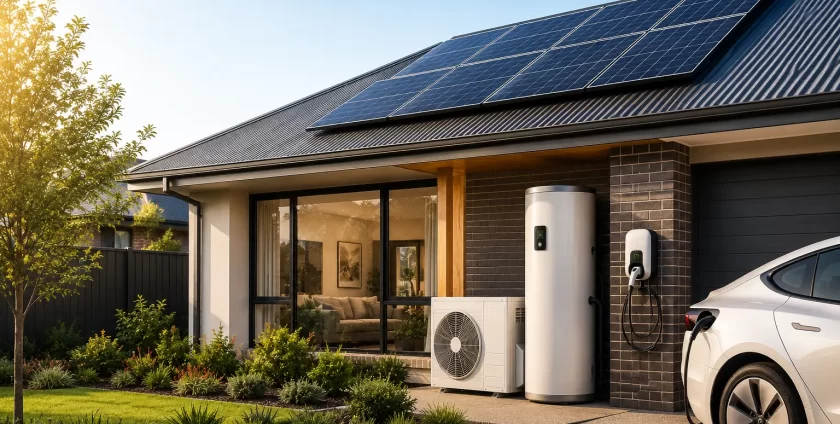
Electric vehicles are becoming an increasingly common sight on Australian roads, and for many homeowners, the next big question is simple: what size solar system do I need to charge an EV at home?
If you already own an electric vehicle or plan to buy one, combining solar panels with EV charging can help you use more of the electricity generated on your roof and reduce the amount of grid electricity you buy for transport.
However, choosing the right solar E V Charging system size is important. A system designed only around your current household electricity use may not generate enough excess solar power for regular EV charging.
In this guide, we explain solar EV charging in Australia, compare popular solar system sizes and look at what Melbourne and Victorian EV owners should consider before installing or upgrading solar.
Can You Charge an EV With Solar Panels?
Yes. You can charge an EV with solar panels by using electricity generated by your rooftop solar system.
During daylight hours, solar panels generate electricity that can first be used by your home. If your EV is connected to a compatible home EV charger while sufficient solar is available, some or all of the remaining solar generation can be used to charge the vehicle.
The key advantage of solar EV charging is increased solar self-consumption. Instead of relying entirely on grid electricity for home charging, you can use more of the renewable electricity generated on your own roof.
For EV owners who regularly charge at home, solar panels can become an important part of a broader home energy strategy.
How Much Electricity Does an EV Need?
The amount of electricity required to charge an EV depends on several factors, including:
- The EV model and battery capacity
- How many kilometres you drive each day
- The vehicle’s energy efficiency
- How often you charge at home
- Your preferred charging speed
- Charging losses
- Whether you charge during the day or overnight
As a simple example, an EV that uses approximately 15–20 kWh of electricity per 100 kilometres may require around 6–8 kWh of energy to replace roughly 40 kilometres of daily driving.
Your actual energy use may be higher or lower.
This is why there is no single solar system size that suits every EV owner. The right solar system should be designed around both household electricity consumption and expected EV charging demand.
What Size Solar System Do You Need to Charge an EV?
For many Australian homes, common rooftop solar system sizes include 6.6kW, 10kW and larger systems.
When adding an electric vehicle to your home’s electricity demand, it is important to think beyond today’s energy bills.
Is a 6.6kW Solar System Enough for EV Charging?
A 6.6kW solar system may support EV charging for households with moderate electricity consumption and relatively low daily driving.
It may be suitable if:
- You drive shorter distances
- Your EV is parked at home during solar generation hours
- Your household daytime electricity use is relatively low
- You can schedule EV charging during the day
- You only need to replace a small amount of EV energy each day
However, a 6.6kW system may have limited excess solar generation once household appliances, heating, cooling and hot water are considered.
If you are planning to purchase an EV in the near future, it may be worth assessing whether a larger solar system offers greater long-term flexibility.
Is a 10kW Solar System Better for EV Charging?
For many EV-owning households, a 10kW solar system may provide more opportunity to generate excess solar electricity for home EV charging.
A larger solar system can be particularly useful for homes with:
- One or more electric vehicles
- High daytime electricity consumption
- Electric heating and cooling
- Heat pump hot water
- A swimming pool
- A home office
- Future battery storage plans
A 10kW solar system does not mean your EV will always charge directly from 10kW of solar power. Solar generation changes throughout the day and is affected by weather, roof orientation, shading and system design.
The main benefit is greater overall solar generation, which may create more surplus electricity for solar-powered EV charging.
What About Solar Systems Larger Than 10kW?
Some households may benefit from a solar system larger than 10kW, particularly where electricity demand is high.
For example, a larger solar system may be worth considering if you have two EVs, drive long distances regularly or are transitioning towards an all-electric home.
Before installing a larger system, your solar provider should assess:
- Available roof space
- Roof orientation
- Shading
- Switchboard capacity
- Single-phase or three-phase power
- Inverter requirements
- Local network requirements
- Household electricity consumption
- EV charging patterns
The biggest solar system is not automatically the best solar system. Correct system design should be based on how and when your household uses electricity.
Is a Home EV Charger Worth Installing?
A dedicated home EV charger can provide faster and more controlled EV charging than a standard household power point.
Dedicated AC home chargers commonly operate between 7kW and 22kW, depending on the charger, vehicle and electrical supply.
For many Australian homes, a 7kW Level 2 EV charger is a popular option.
Smart EV chargers may also offer features such as scheduled charging and solar-aware charging. Depending on the charger and system configuration, this can help align EV charging with periods of higher rooftop solar generation.
If your goal is to charge your EV with solar, charger compatibility and energy management should be considered during the system design stage.
When Is the Best Time to Charge an EV With Solar?
Generally, the best time for solar EV charging is when your rooftop solar system is producing excess electricity.
For many homes, this means charging during the middle of the day.
Your household will normally use available solar electricity first. Any remaining solar generation may then be available for EV charging, battery storage or grid export, depending on your system setup.
For example, if your solar system is generating 7kW and your home is using 2kW, approximately 5kW may be available for other uses before system losses and other factors are considered.
Charging an EV overnight usually means drawing electricity from the grid unless your home has a battery or another suitable energy management arrangement.
This is why EV owners who work from home, have flexible schedules or can leave their vehicle connected during the day may have greater opportunities to use rooftop solar for charging.
Do You Need a Solar Battery for EV Charging?
No. You do not necessarily need a solar battery to charge an EV with solar panels.
If your EV is parked at home and charging while your solar system is generating electricity, direct solar EV charging may be possible without a home battery.
A solar battery may be useful when your household generates excess solar during the day but uses more electricity later in the evening.
Battery storage can increase solar self-consumption and reduce reliance on grid electricity. However, the battery size, EV charging requirements and overall household energy profile should be carefully assessed.
In some homes, installing more solar generation may be a higher priority than immediately adding battery storage. In others, a solar and battery system may provide a more suitable energy solution.
Can You Add More Solar Panels for EV Charging?
If you already have solar and are buying an electric vehicle, you may be wondering whether you can add more solar panels to your existing system.
In many cases, a solar system upgrade may be possible. However, compatibility depends on your existing panels, inverter, roof space, electrical infrastructure and local network requirements.
An installer may recommend:
- Expanding the existing solar system
- Installing an additional solar system
- Upgrading the inverter
- Reviewing the switchboard
- Adding a smart EV charger
- Considering battery storage
Before upgrading, it is important to review your current solar generation and electricity consumption data.
This helps determine whether your existing system is already producing enough excess solar for EV charging.
How to Calculate the Right Solar System Size for Your EV
To estimate the right solar system size for EV charging, start with your household electricity consumption.
Next, estimate how many kilometres you drive each week and check the energy efficiency of your EV.
Then consider when the EV will usually be parked at home.
A household driving 200 kilometres per week will have different charging requirements from someone travelling 600 kilometres per week.
You should also consider future electricity demand.
Are you planning to buy a second EV? Replace gas heating with reverse-cycle air conditioning? Install heat pump hot water? Add a pool?
Designing solar only around your current electricity bill may result in a system that is too small for your future needs.
Is Solar EV Charging Worth It in Melbourne?
For many Melbourne and Victorian homeowners, combining rooftop solar with home EV charging can be a practical way to increase solar self-consumption and reduce grid electricity used for transport.
The potential benefit depends on your driving habits, electricity tariff, solar generation and charging schedule.
The most important factor is system design.
A properly designed solar system should consider your home’s current energy use, future electrification plans and expected EV charging demand.
Get the Right Solar System for Your EV
Buying an electric vehicle changes the way your household uses electricity.
Whether you are considering a 6.6kW solar system, 10kW solar system or a larger solar installation, your system should be designed around your real household energy needs.
At Solutions4Solar, we help homeowners explore solar solutions based on their property, electricity consumption and future energy goals.
Planning to buy an EV or already charging one at home?
Speak with Solutions4Solar today to explore the right solar system for your home and EV charging needs.
Frequently Asked Questions
How many solar panels do I need to charge an EV?
The number of solar panels required depends on panel capacity, EV energy use, daily driving distance and household electricity consumption. A personalised solar assessment can provide a more accurate system recommendation.
Can a 6.6kW solar system charge an electric car?
Yes. A 6.6kW solar system may support EV charging, particularly for households with moderate electricity use and lower daily driving distances. Available excess solar generation is an important factor.
Is a 10kW solar system enough for EV charging?
A 10kW solar system may be suitable for many EV-owning households. The right size depends on household electricity use, driving habits, roof conditions and future energy requirements.
Can I charge my EV directly from solar panels?
A properly configured solar and EV charging setup can use rooftop solar generation for EV charging. The amount of direct solar charging available will depend on solar output and household electricity demand at the time.
Do I need a battery to charge my EV with solar?
No. An EV can be charged using rooftop solar without a home battery when the vehicle is connected during periods of solar generation. A battery may help increase solar self-consumption at other times.
What is the best solar system size for an EV owner?
There is no universal solar system size for every EV owner. Your ideal system should be based on household electricity use, EV kilometres travelled, charging schedule and future electrification plans.
- By: web admin
- 0 comment